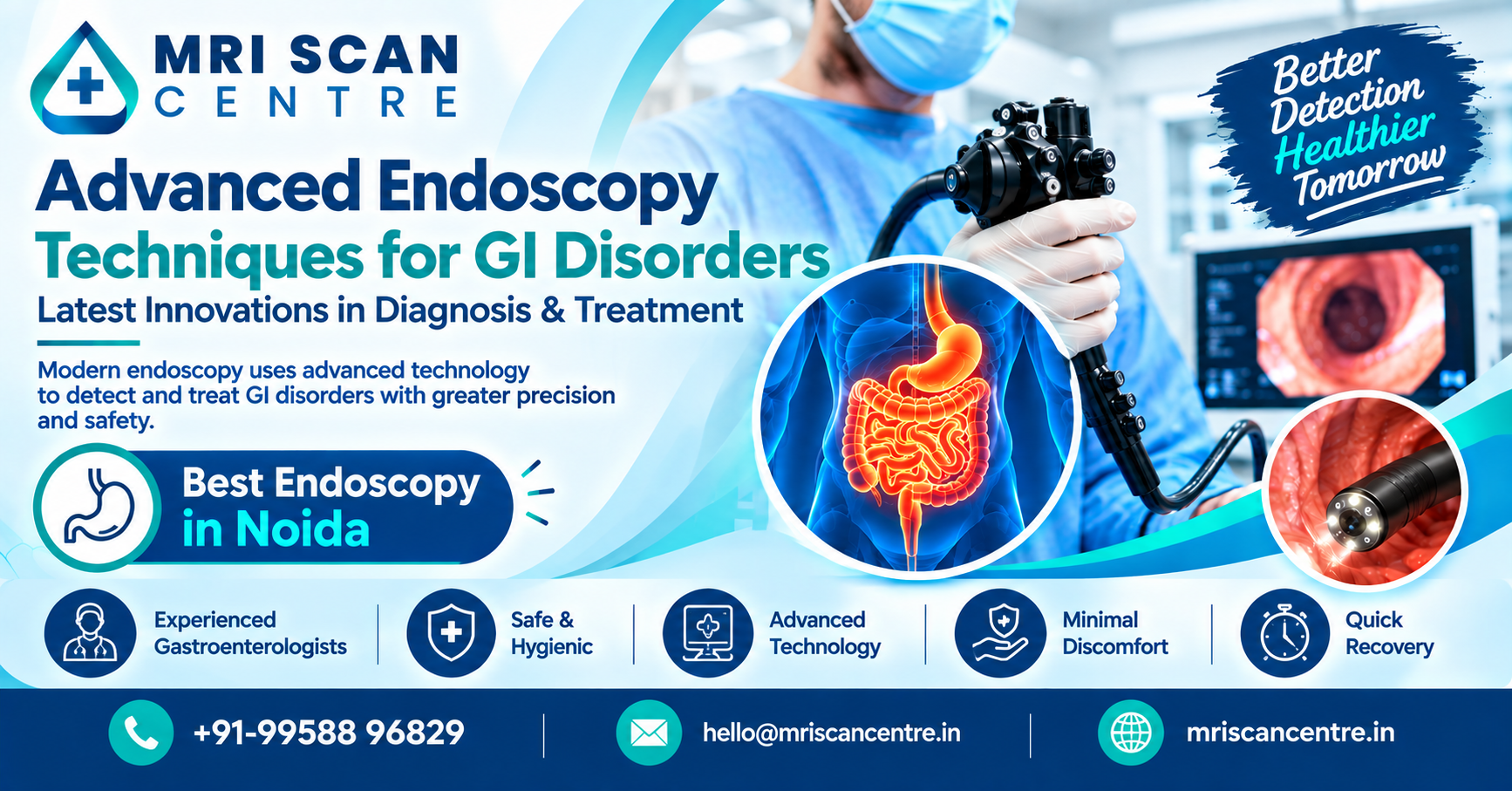

Gastrointestinal (GI) disorders can affect the oesophagus, stomach, small intestine, colon, liver, gallbladder and pancreas. Early and accurate diagnosis plays an important role in effective treatment. Endoscopy has become an important minimally invasive approach for both diagnosing and treating a wide range of gastrointestinal conditions.
With advances in imaging, artificial intelligence, therapeutic devices and minimally invasive techniques, modern endoscopy is becoming more precise, effective and patient-friendly.
What Are Endoscopic Techniques for GI Disorders?
Endoscopic techniques involve using a thin, flexible instrument called an endoscope to examine the digestive tract. Depending on the procedure, doctors can also collect tissue samples, remove abnormal growths, control bleeding or perform other treatments.
Common GI endoscopic procedures include:
Upper GI Endoscopy
Also known as oesophagogastroduodenoscopy (EGD), upper GI endoscopy allows doctors to examine the oesophagus, stomach and duodenum. It may help identify conditions such as:
- Acid reflux and GERD
- Gastritis
- Peptic ulcers
- Gastrointestinal bleeding
- Polyps and tumours
- Other abnormalities of the upper digestive tract
Colonoscopy
Colonoscopy examines the colon and rectum. It is commonly used for colorectal cancer screening and for investigating symptoms such as rectal bleeding, unexplained changes in bowel habits and persistent abdominal discomfort.
During the procedure, polyps can also be removed and tissue samples may be collected when required.
Endoscopic Retrograde Cholangiopancreatography (ERCP)
ERCP combines endoscopy with X-ray imaging to diagnose and treat problems involving the bile ducts and pancreatic ducts. It may be used for conditions such as bile duct stones, narrowing of the ducts and certain blockages.
Endoscopic Ultrasound (EUS)
EUS combines endoscopy with ultrasound imaging to produce detailed images of the digestive tract and nearby organs. It can help evaluate pancreatic lesions, submucosal abnormalities and lymph nodes and may assist in cancer staging and tissue sampling.
Latest Advancements in Endoscopy
Modern endoscopy has moved beyond simple visual examination. Several technologies are now helping doctors improve lesion detection, tissue assessment and minimally invasive treatment.
-
Artificial Intelligence in Endoscopy
Artificial intelligence (AI) is increasingly being explored and incorporated into gastrointestinal endoscopy.
AI-assisted systems can analyse endoscopic images in real time and may help identify subtle abnormalities, including polyps and suspicious lesions.
Potential applications include:
- Computer-aided detection of GI lesions
- Computer-aided characterisation of abnormal tissue
- Assistance with examination quality
- Standardised documentation and reporting
AI is designed to support the expertise of the endoscopist rather than replace clinical judgement.
-
Advanced Imaging Techniques
Modern endoscopes can provide enhanced visualisation of gastrointestinal tissue.
Narrow Band Imaging (NBI) uses specific wavelengths of light to highlight mucosal and vascular patterns. It can help doctors identify subtle abnormalities and early lesions.
Confocal Laser Endomicroscopy (CLE) provides microscopic-level images of the GI lining during an endoscopic examination and may assist in evaluating suspicious areas.
Optical Coherence Tomography (OCT) provides high-resolution cross-sectional images of tissue and has potential applications in evaluating certain early GI abnormalities.
-
Advances in Endoscopic Ultrasound
EUS technology has expanded considerably beyond diagnostic imaging.
Contrast-enhanced EUS can improve visualisation of vascular patterns and help in the assessment of certain lesions.
EUS elastography evaluates tissue stiffness and may provide additional information when assessing pancreatic masses and lymph nodes.
EUS-guided procedures can also assist with tissue sampling, drainage of selected fluid collections and other minimally invasive interventions.
-
Third-Space Endoscopy
Third-space endoscopy refers to advanced procedures that work within the layers of the gastrointestinal wall.
Important techniques include:
Peroral Endoscopic Myotomy (POEM): A minimally invasive procedure used primarily for treating achalasia by cutting the abnormal muscle responsible for difficulty in swallowing.
Submucosal Tunneling Endoscopic Resection (STER): Used in selected cases to remove subepithelial tumours from areas such as the oesophagus and stomach.
Gastric Peroral Endoscopic Myotomy (G-POEM): An advanced endoscopic technique used in selected patients with gastroparesis.
-
Endoscopic Submucosal Dissection
Endoscopic Submucosal Dissection (ESD) allows selected larger or more complex superficial lesions to be removed in one piece.
Compared with conventional surgical approaches in appropriate cases, ESD can provide organ-preserving treatment while avoiding larger surgical incisions.
The suitability of ESD depends on factors such as lesion size, location, depth and pathology.
-
Endoscopic Full-Thickness Resection
Endoscopic Full-Thickness Resection (EFTR) is an advanced technique that can remove selected lesions involving deeper layers of the gastrointestinal wall.
It may be considered for certain subepithelial tumours or difficult lesions where conventional endoscopic removal may not be appropriate.
-
Lumen-Apposing Metal Stents
Lumen-Apposing Metal Stents (LAMS) have expanded the possibilities of minimally invasive endoscopic treatment.
In selected cases, they can be used for drainage of pancreatic fluid collections and other specialised endoscopic procedures. Their use depends on the patient’s condition and the expertise available.
-
Radiofrequency Ablation
Radiofrequency Ablation (RFA) uses controlled thermal energy to destroy abnormal tissue.
It has an established role in treating selected patients with Barrett’s oesophagus, particularly when dysplasia is present. Careful assessment and follow-up are important when this treatment is considered.
-
Bariatric Endoscopy
Endoscopic procedures are also being used in weight-management treatment.
Endoscopic Sleeve Gastroplasty (ESG) uses an endoscopic suturing system to reduce stomach volume without conventional surgical incisions.
Intragastric balloons are temporary devices that occupy space within the stomach and may support weight loss as part of a comprehensive weight-management programme.
-
Capsule and Robotic-Assisted Endoscopy
Capsule endoscopy allows patients to swallow a small camera capsule that travels through the digestive tract while capturing images.
Advances in capsule technology and robotic control are being developed to improve navigation and visualisation, particularly in areas that can be difficult to reach using conventional endoscopy.
-
Molecular and Fluorescence-Guided Endoscopy
Emerging technologies are investigating how molecular markers and fluorescent agents can help identify abnormal cells during endoscopy.
These techniques could potentially improve the detection and characterisation of early cancers and other tissue abnormalities in the future.
-
Virtual Reality and Augmented Reality
Virtual Reality (VR) can provide immersive environments for training endoscopists and practising complex procedures.
Augmented Reality (AR) may assist by displaying additional imaging or navigation information alongside the endoscopic view.
These technologies are developing areas that may contribute to improved procedural training and precision.
How Do Advanced Endoscopic Techniques Benefit Patients?
Modern endoscopy can offer several potential benefits when appropriately selected:
- Minimally invasive diagnosis and treatment
- Smaller or no external surgical incisions
- Faster recovery in many procedures
- Ability to diagnose and treat during the same procedure in selected cases
- More detailed visualisation of gastrointestinal abnormalities
- Earlier identification of certain lesions
- Organ-preserving treatment in appropriate patients
However, not every technique is suitable for every patient. The choice of procedure depends on the symptoms, diagnosis, location and size of the lesion, medical history and clinical assessment.
When Should You Consider an Endoscopy?
A doctor may recommend endoscopy when symptoms or test results suggest a gastrointestinal problem.
Depending on the situation, endoscopy may be considered for:
- Persistent abdominal pain
- Difficulty or pain while swallowing
- Persistent heartburn or reflux symptoms
- Unexplained vomiting
- Gastrointestinal bleeding
- Blood in the stool
- Unexplained anaemia
- Persistent changes in bowel habits
- Unexplained weight loss
- Suspected polyps or GI tumours
- Screening for colorectal cancer in appropriate individuals
The decision to undergo endoscopy should be made after evaluation by a qualified healthcare professional.
Best Endoscopy in Noida
For patients looking for the Best Endoscopy in Noida, choosing a centre with appropriate endoscopic equipment, experienced medical professionals and proper diagnostic support is important.
At MRI Scan Centre, diagnostic healthcare services include:
- MRI Scan
- CT Scan
- Ultrasound
- Blood Tests
- PET CT Scan
Having multiple diagnostic services available can help patients undergo the appropriate investigation based on their symptoms and doctor’s recommendations.
For endoscopy, patients should discuss their symptoms, medical history, preparation requirements and the most appropriate procedure with their healthcare provider.
The Future of GI Endoscopy
Endoscopic technology continues to evolve rapidly. Artificial intelligence, enhanced imaging, EUS-guided interventions, advanced tissue resection and minimally invasive therapeutic techniques are expanding what can be diagnosed and treated through an endoscope.
The goal of these innovations is not simply to introduce newer technology but to improve diagnostic accuracy, detect disease earlier, provide targeted treatment and reduce the need for more invasive procedures wherever clinically appropriate.
With continued advances, endoscopy is expected to play an increasingly important role in the diagnosis and management of gastrointestinal disorders.
Frequently Asked Questions
What are the latest advancements in GI endoscopy?
Recent developments include AI-assisted detection, advanced imaging such as NBI, EUS-guided procedures, endoscopic submucosal dissection, full-thickness resection, third-space endoscopy and improved capsule endoscopy technologies.
Is endoscopy a minimally invasive procedure?
Yes. Most endoscopic procedures are performed through natural body openings and do not require large external surgical incisions. The level of invasiveness and recovery time varies depending on the specific procedure.
What is EUS used for?
Endoscopic ultrasound provides detailed images of the digestive tract and surrounding organs. It can help evaluate pancreatic lesions, lymph nodes and subepithelial abnormalities and can also guide tissue sampling in selected cases.
Can endoscopy detect cancer?
Endoscopy can help identify suspicious lesions and, when appropriate, allows tissue samples to be collected for laboratory examination. Early detection depends on the type of cancer, symptoms, screening recommendations and individual risk factors.
Is advanced endoscopy suitable for everyone?
No. Advanced procedures are selected based on the patient’s condition, medical history, symptoms and the characteristics of the suspected abnormality. A specialist should determine which procedure is appropriate.
What diagnostic services are available at MRI Scan Centre?
MRI Scan Centre provides MRI Scan, CT Scan, Ultrasound, Blood Tests, PET CT Scan and Endoscopy services. The appropriate investigation depends on the patient’s symptoms and the recommendation of the treating healthcare professional.